01
Strategy
Brand positioning
Clarify what the brand should mean to customers and why it deserves attention beyond price.
Strategy
E-commerce Growth
FetchIt aligns paid media, owned channels, website conversion, lifecycle marketing, creative, and reporting around the economics of your business — keeping resources focused on conversion, retention, and profitable growth.
Recognition
Many e-commerce brands already have some proof of demand. What is less developed is the system around it — positioning, conversion, retention, and the reporting that connects spend to outcomes.
The brands that compound are the ones whose store, ads, email, and retention finally work as one system.
The arc · the work
The system
A working e-commerce system connects positioning, acquisition, conversion, lifecycle, and review. Each part affects the next — and the value is in running them together.
Strategy
Clarify what the brand should mean to customers and why it deserves attention beyond price.
Build
Improve the product journey, offer structure, trust signals, and path to purchase.
Performance
Use Meta, Google, and relevant discovery channels with clear roles — not as a series of disconnected tests.
Operate
Turn first-time buyers, subscribers, and cart abandoners into a repeatable revenue system through email and SMS.
Build
Build messaging and content around what customers actually respond to, not only what the product team wants to say.
Compound
Connect channel data, website behavior, and business outcomes into decisions about what to improve next.
Run alone, each layer is a project. Run together, they compound.
Business impact
When the system is connected, the brand can make clearer decisions about spend, creative, conversion, and customer value.
Who this is for
This works best for e-commerce brands with product demand or meaningful traction, ready to connect strategy and execution across multiple channels — conversion, lifecycle, creative, and reporting, together. If that sounds like where you are, the first conversation will make it clear quickly.
Proof at work
E-commerce engagements at two different points in the brand arc. Both built systems, not campaigns.

E-commerce Growth
A Garden & Outdoor brand had proven marketplace traction but needed a connected growth system across paid media, lifecycle marketing, conversion, and positioning.
Read More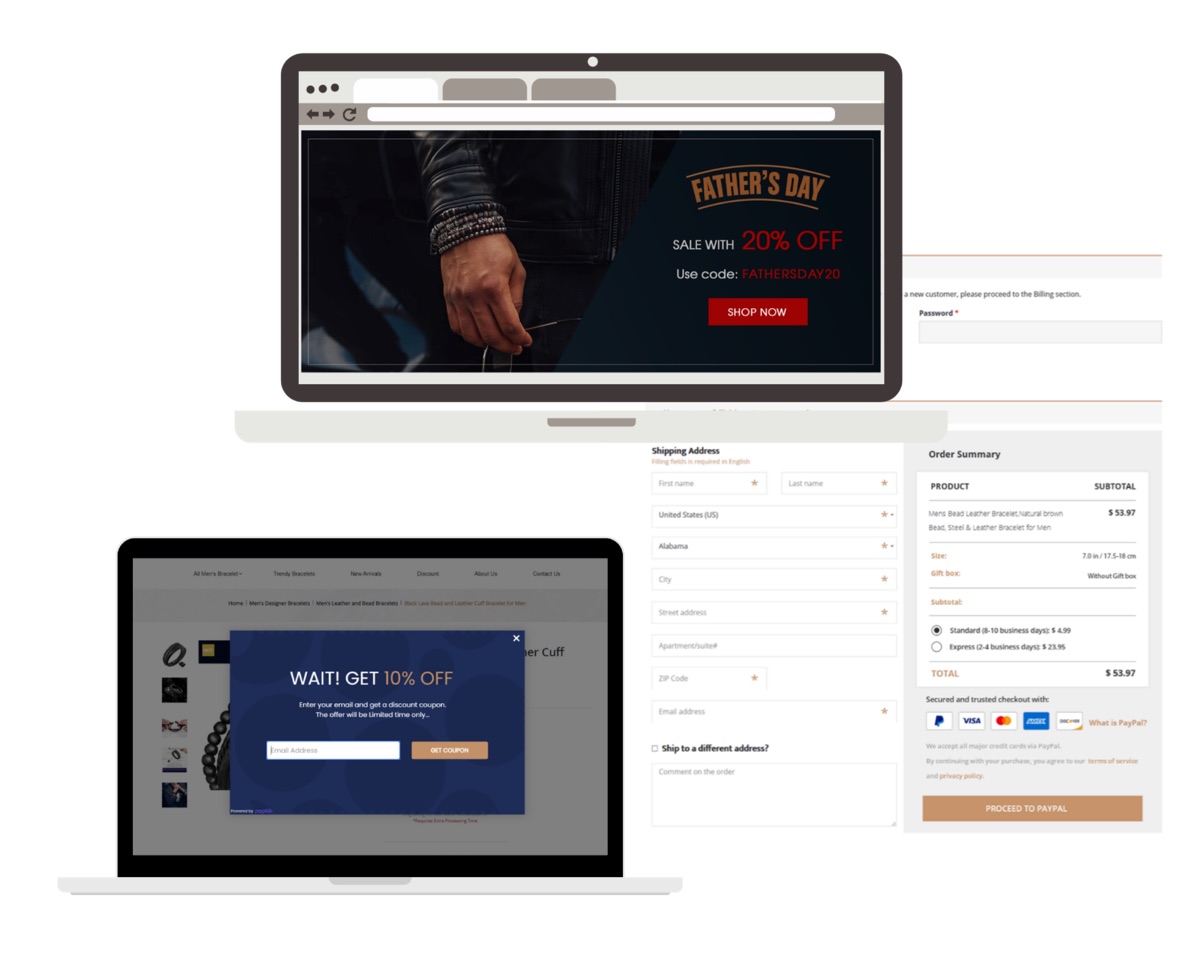
E-commerce Growth
FetchIt rebuilt the website, tracking, SEO, and acquisition setup so a fashion accessory brand could learn from traffic and convert it more effectively.
Read MoreHow we work
The goal is not to run isolated campaigns. It is to build a connected system that can be tested, scaled, and improved — following the same path as every FetchIt engagement: diagnose, prove, build.
Find where growth is actually blocked: traffic, positioning, conversion, offer, creative, lifecycle, or data.
Move the highest-impact lever first — a conversion unlock, an offer fix, or a paid efficiency gain — and test the signal before scaling.
Connect site, channel, creative, lifecycle, and reporting around that priority, then refine it on an operating cadence instead of chasing disconnected tactics.
Questions we usually hear
These are what most founders ask before a first conversation. The answers are below — no pitch, no deck required.
Brands with product-market signal and meaningful revenue — typically those that have outgrown the founder-does-everything stage and need a system to scale. We also work with earlier-stage brands when the foundation and positioning need to come first.
No. We work across e-commerce platforms. The system is built around growth principles — positioning, acquisition, conversion, retention, visibility — not around any single platform's feature set.
No. Paid media is one part of the system. Growth can stall because of positioning, creative, conversion flow, retention, or visibility. We look at how the full system works together, not only how the ad account spends.
Scope determines price. We discuss scope and investment after we understand where the system is stuck and what level of support makes sense.
The diagnostic and first proof phase typically runs 30–60 days. Meaningful system-level results — compounding ROAS, improved retention, stronger conversion — usually become visible in months 3–6, depending on where the business starts.
We can work alongside existing partners or replace them. The diagnostic shows where the gaps are and which parts of the system are underperforming — regardless of who is currently running them.
A weekly check-in covering performance, creative status, and near-term priorities; monthly strategic reviews that analyze trends and test new hypotheses; and quarterly planning that sets direction for the next phase.
Yes. English and Mandarin bilingual capability is available when it is useful for a brand or internal team. It is a secondary capability, not a requirement — the core work is growth strategy, execution, and review.
Start the conversation
Tell us where your brand is now, what is working, and where growth is getting stuck. The first conversation is direct with Tanya, not a salesperson — and by the end, we will both know whether this is the right fit.